by Suzanne
Some yogurt starters require heat to activate the bacteria, so that those bacteria can do the work of fermenting the milk. These yogurt starters are called thermophilic starters, meaning heat-loving. Which yogurt starters are thermophilic? Bulgarian Yogurt Starter is a reusable starter that makes a mild-flavored, thick yogurt. Greek Yogurt Starter is a reusable starter that makes a more tangy, thick yogurt. Vegan Yogurt Starter, while not a reusable starter, is a thermophilic yogurt starter. Vegan Yogurt Starter is the best choice when culturing non-dairy milk such as coconut milk, rice milk, soy milk, or nut/seed milks. NOTE: Vegan Yogurt Starter and non-dairy milks require an added thickener. How do I make thermophilic yogurt at home? Making one of these delicious reusable thermophilic yogurts at home is so easy! All you need is a packet of the dried starter, pasteurized milk, a pot to heat the milk, and a yogurt maker or other heating device. A thermometer is helpful, too.
Organic or Grass-Fed Milk
The grass-fed label is in a similar process to what organic once went through, meaning companies can slap a label on their colorful carton without necessarily being a genuine grass-fed cow. USDA-certified organic milk comes from cows not treated with antibiotics or hormones and fed certified organic grains and grasses.
Grass-fed cows are usually treated better and produce superior, Omega 3s-filled, milk. The best option is to look for the “certified organic grass-fed dairy” label. Making yogurt with ultra-pasteurized milk doesn’t work because the milk is heated to 275 degrees – essentially cooked and unsuitable for culturing. Pasteurized milk produces a thicker yogurt.
Raw Milk
The first step with raw milk is to check if it’s legally available in your state. Although proponents of raw milk believe it’s a more nutritionally complete option, the CDC recommends against consumption based on studies showing a link to disease outbreaks. However, if you decide it’s for you, you can easily use raw milk to make yogurt, usually with an extra step to keep the reusable starter true. The results are generally a thinner yogurt than with pasteurized milk.
Powdered Milk
Powdered milk is excellent for thickening your yogurts. Some experts say keep like with like – meaning if you’re using cow- (or goat-) milk for your yogurt, use dried cow (or goat) milk powder. Powdered milk is a convenient backup as you can store it for a long time, and we recommend the full-fat versions over the nonfat dry milk.
Buffalo, Sheep, Or Goat Milk
If you’re interested in trying buffalo, sheep, or goat milk yogurt–excellent! Goat milk makes smaller curds and tends to be runnier. Additionally, recent studies show that goat’s milk may have anti-inflammatory properties too! Sheep milk has double the protein of cow’s milk and more folic acid – which is crucial for women of childbearing age. Using it results in a sweeter yogurt. Buffalo milk, with its higher fat content, creates a denser and richer yogurt.
Heating Devices
If you do not own a yogurt maker, no worries! There are many ways to maintain that culturing temperature of 110ºF.
- Dehydrator: a dehydrator with the trays removed will hold several jars of yogurt.
- Instant Pot: Some Instant Pots come with a yogurt setting; some do not.
- Oven: older ovens often have lower temperature settings, perfect for making yogurt.
- Crock pot: a crock pot can be tricky for making yogurt. Try a couple of test runs with water, measuring the temperature over several hours, to get to know your appliance.
- Jar wrapped in a towel or blanket: How did folks make yogurt long ago before electricity and modern appliances? They wrapped the yogurt jar or crock in blankets and left it to ferment.
Any of these methods requires some testing. To avoid wasting milk, test your appliance or method first with heated water, measuring the temperature over several hours. Make adjustments to settings as needed, and you’re all set!
Greek Yogurt Starter vs. Greek-style Yogurt: What's the Difference?
Greek Yogurt Starter is a yogurt starter that produces thick, tangy yogurt. But don’t expect this yogurt starter to produce yogurt that is as thick as store brands. Greek-style yogurt is the name used for extra-thick yogurt made from any starter. Most store brands have thickeners added or have been strained to remove whey, that watery liquid component of milk products.
How to Make Greek-style Yogurt
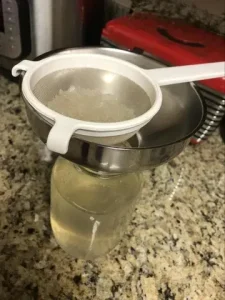
To make Greek-style yogurt at home, try straining your finished yogurt.
- Line a strainer with a clean, tight-weave cotton kitchen towel or similar cloth
- Place the lined strainer over a bowl
- Fill the lined strainer with yogurt that has been completely cooled
- Strain for several hours, to desired thickness. Discard whey or use for another project.
- Enjoy your Greek-style yogurt!